
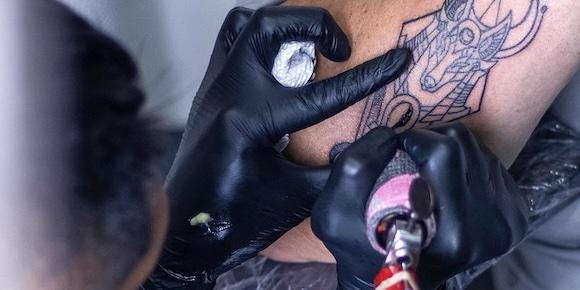
I recently wrote an article on the topic of the increased incidence of a specific form of leukemia in people who had a tattoo. Since then, another research study has been published, this one indicating additional concern over the use of the skin as a canvas.
But first, I begin by stating that I acknowledge the fact that there are many in our culture (and I am sure many reading this article) who have had “body art” inked into their skin. Statistically, 30 percent of all Americans and 40 percent of individuals aged 18 to 34 have at least one tattoo. So, tattoos have become more common today. At first glance, the advice that follows is “Don't get a tattoo!” However, it also remains that my most enduring advice is to care for your immune system, especially if you have an increased risk of disease.
NEW FINDINGS
This study I am sharing today evaluated the relationship of tattoos to a particular form of skin cancer called “cutaneous melanoma” (CM).
Melanoma originates in cells located in the skin that produce a substance called melanin. Melanin is a pigmentation that gives color to our skin as well as our hair and eyes.
CM is an aggressive form of skin cancer that can rapidly metastasize or spread to other tissues in the body. This form of skin cancer typically arises in areas of the skin that are exposed to the sun.
Acting on a sharp rise in CM over the past 30 years as well as reports of the presence of carcinogenic chemicals in tattoo ink and related solvents and preservatives, researchers looked at the potential association between tattoo exposure and CM. The study was conducted in Sweden and funded in part by Lund University. Data was used from 2,880 Swedish people diagnosed with CM between the ages of 20 and 60. They found an alarming statistic. The results suggested that tattooed individuals had a 29% increased risk of cutaneous melanoma compared to non-tattooed individuals.
Back in 2012, a literature review of case reports was published in The Lancet Oncology. The researchers concluded that the relationship between tattoos and CM was likely coincidental. However, this result is considered flawed due to selective reporting of such literature reviews, making them less reliable than a study that uses an adequate methodological approach.
As for this newer, more reliable finding, the authors did observe that more investigation is needed to clarify their findings, especially when you consider that the rising tattoo trend is a public health issue.
ADDITIONAL DETAILS
Larger tattoos did not seem to increase the incidence of the condition. However, colored tattoos alone or in combination with black or grey coloration did demonstrate a slightly increased incidence of CM.
UV radiation remains the most well-established risk factor for CM, estimated to be comparable to up to five times higher than the tattoo risk observed in the study. Sun exposure did play a role in the incidence of individuals contracting CM in this study as well. Once again, the authors state that further investigation is needed to determine whether or not tattoo ink exacerbates the risk from UV exposure.
The duration of the tattoo did cause a higher risk. Tattoos that were present for 10-15 years posed a higher risk as well.
There are two subtypes of CM. One being in-situ, meaning in its original site. This form does not migrate anywhere else. It stays where it originates. The second form is the “invasive type.” This type of CM invades surrounding tissues and eventually metastasizes to other tissue types and organs. Researchers found that the risk associated with tattoo exposure increased for both types.
The researchers go on to state that, when tattoo ink is injected into the human skin, it is perceived as a foreign substance by the body. As such, the immune system becomes activated, with the ink pigments being encapsulated by immune cells. These pigments are then transported to the lymph nodes.
According to associate researcher in toxicology at Lund University Emelie Rietz Liljedahl, “Azo pigments are the most common organic colorants in tattoo ink. These could be a potential risk because we already know that these can break down into harmful chemicals that may cause cancer. This particularly applies for exposure to UV radiation from the sun, sun beds or laser treatments.”
WHAT YOU CAN DO
It is important to remember that we must be cautious about not only what we put into our bodies, but what we put on our bodies as well. Substances that are “foreign” to our bodies are considered by our immune system to be toxic to our system and therefore must be removed, mitigated, disposed of, or rendered inert. The immune system is constantly monitoring for any invading substance. Once the alarm goes off, an initial inflammatory response is triggered and a cascade of immune responses occur until the invading assault is dealt with or eliminated.
Unfortunately, the immune system can sometimes be overwhelmed. I always tell my patients that the immune system is like a juggler who is constantly trying to keep the proverbial “plates spinning.” A person may have had an infection years ago, such as a Lyme exposure, mononucleosis episode, or even a Streptococcal infection, which may still be harbored in their body. Add to this the cancer cells the immune system deems to be invaders and is constantly killing on a daily basis. Then, add in the toxic materials that we ingest every day in concert with the things that we slather on our skin which may contain toxic chemicals plus with the airborne substances that we inhale every day ... we can understand that our immune systems can become overwhelmed and unable to keep up.
This is why it is so important that we all “clean up our daily routines” and get those foreign substances out of our body. We then have to do our best to make sure that we don’t continue to put them back into our body.
For those of you who have tattoos already, please don’t panic. Instead, take some precautions. Avoid prolonged or extreme sun exposure. Stay away from tanning beds and other forms of ultra-violet radiation. Also, do your best to support your immune system. Consume antioxidant-rich foods. Avoid cigarette smoke, and other forms of airborne toxins. Stay away from sugar and processed foods.
In short, do what you can to detoxify your body in every way you can. This advice applies to everyone, tattooed or not. One highly effective way to do that is to join us for our 2026 “Crave Clinic Event.” Not only will you actively be led through a detoxification program, you will learn how to live a “genetically congruent lifestyle.” You will learn how to live a “Longer Healthier Life,” one that aims to avoid toxicity as best you can. This could be the beginning of a whole new you and a way to live your life as your body was designed. I ask you to please join us today for a journey that will change your life forever!
Dr. Pfeiffer